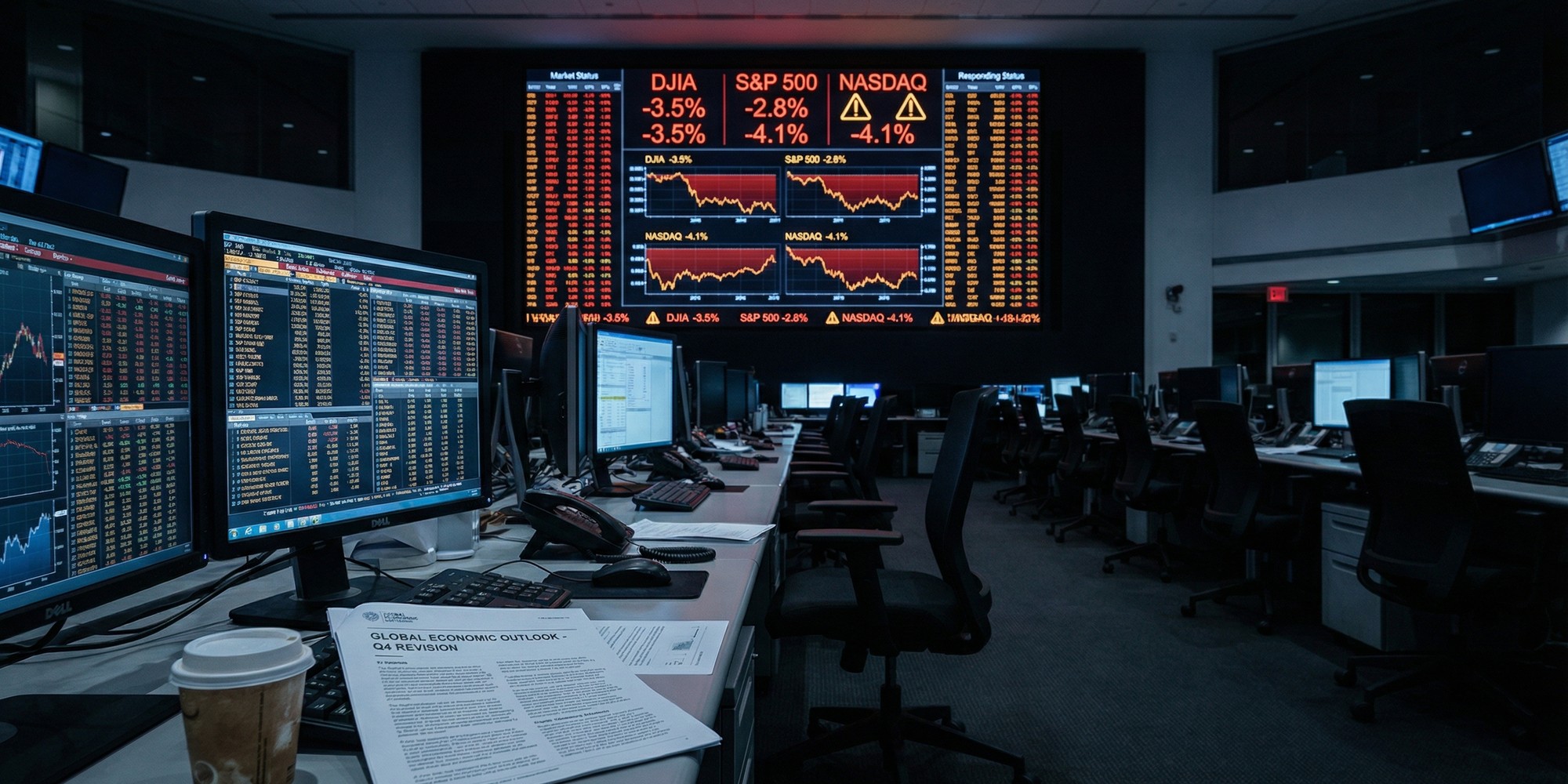
US equity markets closed out the first quarter of 2026 with their strongest single-session performance in nearly ten months, as signals from Washington suggesting a possible American withdrawal from active involvement in the Iran conflict triggered broad-based buying across every major index. The S&P 500 settled at 6,528.52 on Tuesday, March 31 — a gain of 184.80 points, or 2.91%, on the session — while the Dow Jones Industrial Average surged 1,125.37 points to close at 46,341.51. The Nasdaq Composite advanced 3.8%, its largest single-day move since May 12, 2025. Yet Tuesday's relief rally could not erase a quarter defined by geopolitical disruption, energy inflation, and compressed corporate valuations.
The Catalyst: Iran Exit Signals Move Markets
The rally's ignition point was a report — partially confirmed by the White House — that the Trump administration is weighing a de-escalation framework that would end direct US military involvement in the Iran conflict without requiring a formal ceasefire agreement. The signal, which circulated through financial media during the Tuesday morning session, was enough to produce an immediate repricing across asset classes. Brent crude futures fell sharply from their recent $115+ range as traders unwound war-premium positions. The 10-year Treasury yield slipped to approximately 4.32% from recent elevated levels, easing pressure on equity valuations.
Technology megacaps led the charge. Nvidia climbed more than 5% as the AI chip demand narrative, which had been overwhelmed by macro fears for weeks, reasserted itself on improved risk appetite. Meta Platforms surged 6%, partially recovering from an 11% loss two weeks prior. Microsoft rose more than 3%, though the software giant ended Q1 down approximately 25% — its worst quarterly performance since the fourth quarter of 2008. US defense and foreign policy analysts have separately warned that prolonged Iran engagement has created strategic gaps in Indo-Pacific deterrence, a secondary pressure point that markets are beginning to price into long-duration risk assets.
Q1 2026: A Quarter to Forget
One session of optimism could not change the quarterly ledger. The S&P 500 finished Q1 2026 down approximately 7% — its worst first-quarter performance since the pandemic-disrupted Q1 of 2020. The Nasdaq fared worse, shedding roughly 10% over the three-month period. The Dow ended Q1 with a loss of approximately 5%. All three indices officially crossed into correction territory at various points during the quarter, driven by an interlocking set of pressures: Brent crude above $115 per barrel, Federal Reserve policy paralysis in the face of energy-driven inflation, five consecutive weeks of equity outflows, and persistent uncertainty about the scope and duration of US involvement in Iran.
The damage was not uniformly distributed across sectors. Energy was the clear Q1 winner, as oil services, exploration and production, and pipeline companies benefited directly from elevated crude prices and war-premium margins. Defensive plays — utilities, consumer staples, and healthcare — also outperformed as institutional portfolios rotated away from growth exposure. Technology and communication services bore the brunt of the quarter's losses, with the Philadelphia Semiconductor Index declining more than 14% from its Q4 2025 peak to its Q1 trough.
The Federal Reserve held rates steady throughout the quarter. Chairman Jerome Powell's March statement explicitly ruled out rate hikes despite oil-driven headline CPI pressures, framing the Fed's stance as "watching-and-waiting." The CME FedWatch tool showed markets pricing in a roughly 65% probability of at least one rate cut before year-end — a significant shift from early January expectations — as the economic growth outlook deteriorated. Moody's Analytics placed the probability of a US recession within the next 12 months at 49% as Q1 closed. Globally, the quarter-end pressure extended to UK gilt yields approaching 5% as Asian equity markets slid on the same geopolitical overhang, reinforcing the cross-border nature of the current risk cycle.
Earnings Season: The Next Stress Test
With Q1 now in the books, attention shifts to Q1 earnings season, which begins in earnest during the second week of April when the major financial institutions report. According to FactSet's latest earnings insight, the blended earnings growth estimate for the S&P 500 in Q1 2026 stands at 13.0% — down modestly from the 12.8% estimate at the start of the quarter but still reflecting a resilient underlying profit environment. The estimated Q1 bottom-up EPS aggregate of $71.24 suggests that corporate America, on balance, navigated elevated input costs and demand uncertainty reasonably well.
The key variable for Q2 is whether the geopolitical discount begins to unwind in a durable way. The diplomatic developments referenced in Tuesday's rally remain preliminary. No formal framework has been presented; no US withdrawal timeline has been specified. The Strait of Hormuz remains operationally constrained. Allied coordination on basing and airspace access — including Spain's refusal to grant overflight rights — continues to complicate any rapid de-escalation scenario, which limits the durability of Tuesday's risk-on move if no concrete agreement materializes in the coming sessions.
The March jobs report, due Friday from the Bureau of Labor Statistics, will be the first major economic data point of Q2 2026. Consensus estimates call for approximately 145,000 nonfarm payroll additions — a sharp deceleration from January's 246,000 — with the unemployment rate ticking up to 4.2%. A softer-than-expected print would reinforce the case for Fed rate cuts later in the year but could also reignite recession concerns. A stronger-than-expected read might temporarily complicate the rate-cut narrative while confirming that consumer-facing sectors have not yet buckled under energy cost pressure.
Looking Ahead: Q2 Opens With Asymmetric Risk
The setup entering Q2 is asymmetric. The relief rally of March 31 represents real optionality pricing — markets assigning some probability to a meaningful geopolitical de-escalation that would allow oil to pull back toward $90 or below, ease Fed caution, and re-energize growth sector valuations that have been deeply discounted. The S&P 500 at 6,528 remains roughly 6% below its all-time high and approximately 8% below pre-Iran-conflict levels, representing meaningful room for recovery if the macro backdrop improves.
On the downside, the risks are also well-defined. Treasury yields remain elevated by historical standards, corporate margin guidance for Q1 and Q2 has not yet been delivered at scale, and the consumer is showing early signs of strain under persistent energy and food cost inflation. The Federal Reserve's FRED database shows real consumer spending growth slowing through February. With the Fed sidelined and fiscal levers constrained, the burden of the next directional move for equities falls almost entirely on geopolitical resolution.