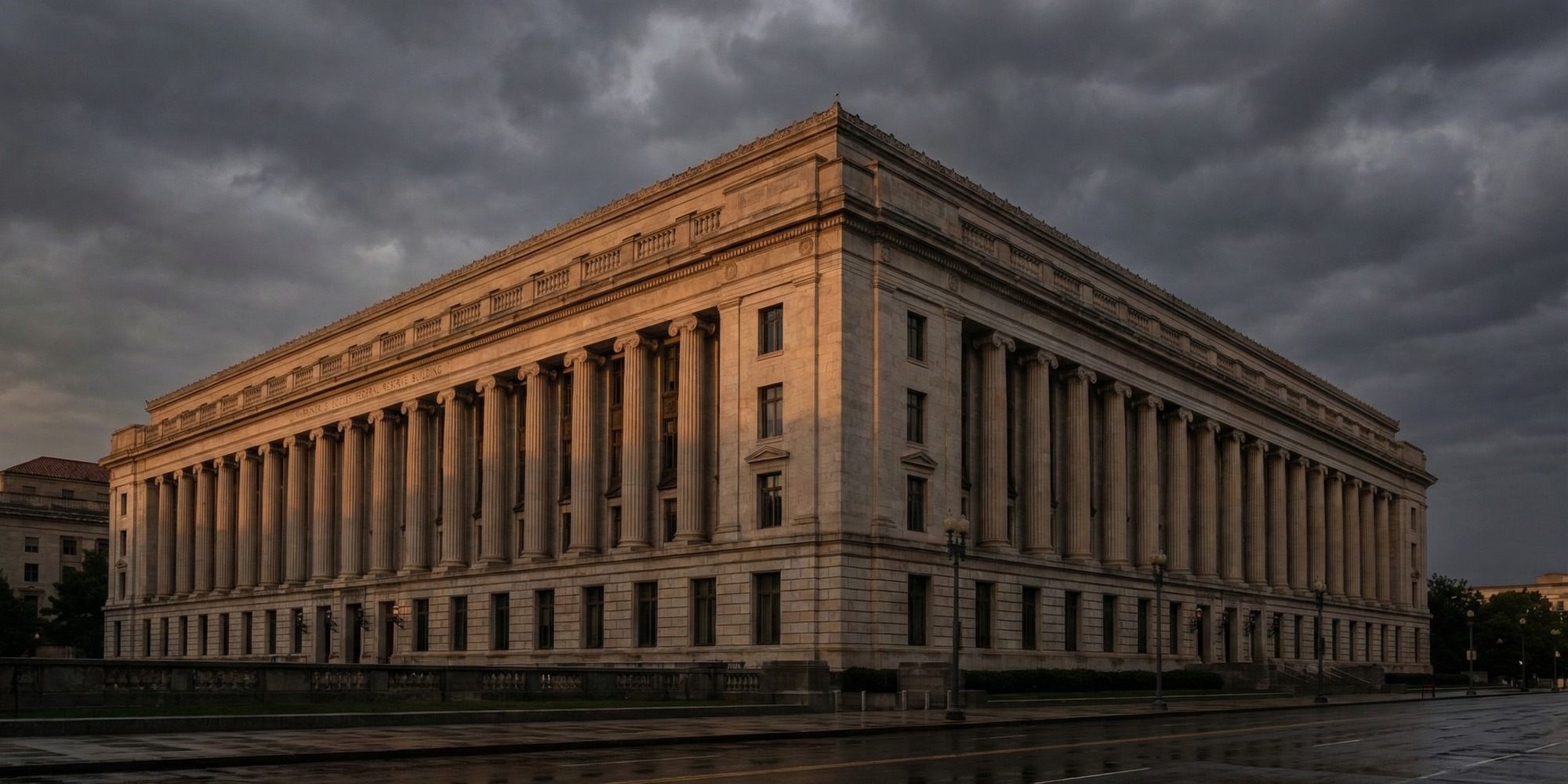
American equity markets closed out their most punishing week in nearly a year on Friday, March 6, as a combustible combination of surging oil prices, a deeply disappointing February jobs report, and escalating conflict in the Persian Gulf overwhelmed any investor appetite for risk. The Dow Jones Industrial Average fell 1.0% on Friday to extend a weekly decline of roughly 3.0% — its steepest seven-day loss since April 2025. The S&P 500 dropped 1.3% on the session and the Nasdaq Composite shed 1.6%, its biggest daily percentage decline since late January.
All three major benchmarks finished the week in negative territory, with the Dow and S&P 500 now both below their January 1 closing levels — making 2026 a year-to-date loss for the blue-chip index in just its ninth full week of trading. The Nasdaq had briefly held onto YTD gains through Thursday before Friday's selloff erased that cushion.
Oil's Historic Surge Dominates the Market Narrative
No single variable drove the week's dislocations more forcefully than crude oil. West Texas Intermediate futures surged to an intraday high of $92.61 a barrel on Friday — their highest level since September 2023 — before settling near $90.65. For the week, WTI gained approximately 35%, a seven-day percentage move that CNBC reported was the largest since WTI futures began trading in 1983.
The proximate cause was the ongoing conflict in the Middle East, now in its second week following U.S. and Israeli strikes on Iranian targets the prior weekend. Iran's claim Thursday of a tanker attack inside the Strait of Hormuz — a chokepoint through which approximately 20% of global seaborne oil passes — sent shockwaves through energy futures markets. On Friday, President Trump posted on Truth Social that there would be "no deal with Iran except UNCONDITIONAL SURRENDER," language that markets interpreted as prolonging uncertainty about a near-term ceasefire.
Danish shipping giant Maersk announced Friday that it was suspending two services linking the Middle East to Europe and Asia — a logistical signal that has historically preceded prolonged supply chain disruptions when Persian Gulf transit has been restricted. The impact extended well beyond crude: global commodity markets are pricing in a meaningful risk premium for any goods transiting the Strait. For context on how these disruptions are rippling through international shipping lanes and commodity prices worldwide, Global Market Updates tracked gold's surge to an all-time high of $5,400 per ounce as safe-haven flows accelerated simultaneously.
February Jobs Report Amplifies Stagflation Concerns
If oil was the week's dominant shock, Friday's Bureau of Labor Statistics employment report delivered a second gut-punch. U.S. employers shed 92,000 jobs in February — a stark reversal from the 50,000 gain that consensus economists had forecast. The unemployment rate ticked up to 4.4% from 4.3% in January, the highest reading in over a year. Revisions to prior months were mixed, providing little offset to the headline miss.
The report landed in a market already grappling with elevated inflation from both the ongoing tariff regime and the energy shock, creating conditions that analysts described as stagflationary. The yield on the 10-year Treasury note climbed to approximately 4.15% by Friday's close, up from 3.95% at the end of the prior week — a 20-basis-point move that reflects bond markets weighing persistent inflation against deteriorating growth prospects.
The Federal Reserve faces a narrowing policy corridor. Rate cuts that might otherwise provide a cushion for slowing employment are complicated by oil-driven inflation, while tightening further would risk accelerating a labor market that has now produced two consecutive months of underwhelming payroll data. The interplay between energy inflation, tariff pass-through costs, and labor market softness represents the most complex macro environment Fed officials have navigated since 2022. The geopolitical backdrop adds another layer: U.S. sanctions targeting Tehran's petroleum export infrastructure — detailed in reporting by Foreign Diplomacy on Iran's shadow fleet — are simultaneously designed to restrict Iranian oil supply while the conflict itself drives prices higher across global benchmarks.
Sector Rotation and Notable Movers
Within the broad selloff, sector performance was notably bifurcated. Energy stocks outperformed sharply, buoyed by the oil surge, even as the rest of the S&P 500 broadly declined. Defensive sectors — utilities and consumer staples — held up relatively better than cyclicals and technology. All seven of the Magnificent Seven technology mega-caps closed lower on Friday, dragging the Nasdaq disproportionately.
Among individual movers, semiconductor company Marvell Technology (MRVL) bucked the broader trend in impressive fashion, surging 18% after reporting quarterly results that included a raised sales forecast on strong artificial intelligence chip demand — making it the top performer on the Nasdaq for the session. That single-stock exception underscored the ongoing selectivity in AI-adjacent semiconductor names even amid market-wide stress.
On the downside, Gap Inc. fell 14% after its earnings release disappointed investors, while Costco Wholesale rose 1.6% on results that beat expectations — a divergence that illustrated defensive consumer positioning as households prioritize value-oriented retail amid rising energy costs.
Safe-haven positioning was visible across asset classes. Gold futures rose 1.7% on Friday to $5,165 per ounce, extending gains that have pushed the metal to historic highs in recent sessions. Silver futures climbed 2.5% to $84.25 an ounce. The U.S. Dollar Index declined 0.3% to 98.97, consistent with some flight from dollar assets despite the traditional safe-haven role of the greenback in prior crisis episodes.
Week Ahead: Fed Speakers, CPI, and Geopolitical Overhang
The week of March 9 will bring several catalysts that could either stabilize or further unsettle markets. The February Consumer Price Index — now expected to show meaningful upward pressure from the oil spike and ongoing tariff pass-through — is the marquee release. A hotter-than-expected print would substantially narrow the path to any near-term Fed easing and could push 10-year yields through the 4.25% level that served as technical resistance in late 2025.
Multiple Federal Reserve officials are scheduled to speak in the coming week, and markets will parse their commentary closely for signals about whether the central bank views the current inflationary impulse as transitory — tied to a conflict that may resolve — or as embedded enough to require a formal policy response. Fed Chair nominee Kevin Warsh has not yet been confirmed by the Senate, leaving a leadership gap at a particularly consequential moment for monetary policy credibility.
The trajectory of the Iran conflict remains the dominant variable. Analysts note that if diplomatic channels open — or if the administration signals flexibility on its stated terms — markets could recover sharply given the degree of risk premium now embedded in both equities and energy. The rubber-band analogy offered by several strategists cuts both ways: a resolution would likely trigger a rapid rebound, while an escalation toward Strait of Hormuz mining or broader regional conflict could accelerate the current repricing.