American equity markets closed Wednesday's session on a positive footing, recovering across all three major benchmarks as investors weighed two significant macro developments: the White House's formal submission of Kevin Warsh as its nominee to chair the Federal Reserve, and a new Beige Book showing an economy still growing modestly but increasingly strained by tariff-driven goods inflation. The rebound came after a three-session losing streak for the Dow Jones Industrial Average, as resilient consumer and technology spending data helped stabilize sentiment.
Index Performance and Market Breadth
The S&P 500 advanced 0.78% to close at 6,869.50, while the Nasdaq Composite — still the most sensitive of the major indices to rate and earnings expectations — gained 1.29% to finish at 22,807.48. The Dow Jones Industrial Average added 238.14 points, or 0.49%, to 48,739.41, snapping a three-session losing streak.
Consumer discretionary was the standout sector of the session, rising 2.0% for its best single-day performance since October 31, 2025. The sector was paced by Ross Stores (+7%), a notable move suggesting that value-oriented retailers may be benefiting from trade-down dynamics. Amazon, Tesla, Airbnb, Expedia, and Booking Holdings each added approximately 3% to their valuations, reflecting a broad recovery in consumer-facing names after a period of underperformance.
The "Magnificent Seven" megacaps finished uniformly higher. Tesla and Amazon led with gains exceeding 3%, followed by Meta (+2%) and Nvidia (+1%). Apple and Microsoft advanced fractionally, each up roughly 0.2%. Analysts at Yahoo Finance noted that tech (XLK) and consumer discretionary (XLY) are both bouncing off the bottoms of their respective six-month trading ranges — a technical development closely monitored by institutional market participants. Communication services (XLC) meanwhile continues to trade near the top of its range, approximately 1% from a record close.
The 10-year US Treasury note yield rose for a third consecutive session to 4.09%, reflecting continued concern among bond investors that the conflict in the Persian Gulf and the domestic tariff regime could combine to sustain inflation above the Fed's 2% target for longer than previously anticipated.
Warsh Nomination: Senate Confirmation and the Rate Path Ahead
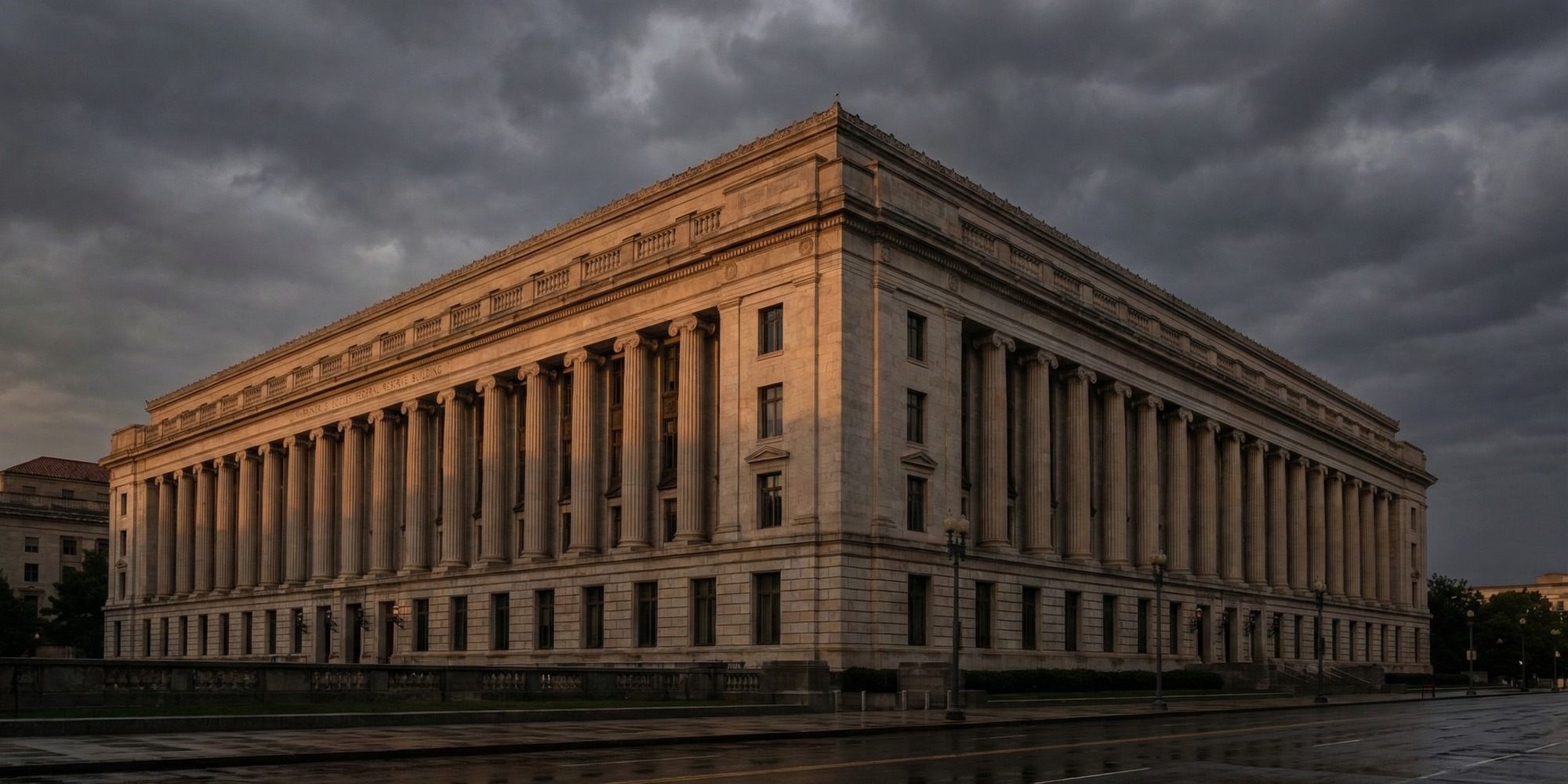
The session's most consequential policy development came from Washington, where the Trump administration formally submitted Kevin Warsh's nomination to the Senate. Warsh, a former Federal Reserve governor and Hoover Institution fellow, has been expected to succeed Jerome Powell since his name first surfaced in January. Powell's term as Fed chair expires in approximately two months.
According to an AP News report published Wednesday, the formal submission sets in motion a Senate confirmation process that markets will scrutinize for signals on the Fed's evolving posture toward monetary policy. The central bank's benchmark federal funds rate currently stands at a target range of 3.50%–3.75%, after a series of reductions carried out in 2025 under Powell.
Interest-rate futures markets are pricing two further cuts in 2026, with the first reduction most likely arriving in June — timing that would coincide with or immediately follow Warsh's anticipated confirmation and onboarding. As Reuters reported in late January, investors broadly expect Warsh to be more inclined than Powell toward easing, in alignment with the administration's stated preference for lower borrowing costs. However, analysts at the Conference Board have cautioned that the two anticipated 2026 cuts could migrate toward year-end under new leadership, rather than landing in the first half of the year, particularly if inflation remains sticky in goods-producing sectors. The Fed's challenge is compounded by the ongoing conflict in the Middle East, which has driven energy prices sharply higher — a dynamic reverberating through global commodity markets and complicating inflationary forecasts on both sides of the Atlantic.
Beige Book: Tariff Pressures Spreading, Hiring Holds Steady
The Federal Reserve's March 2026 Beige Book, released Wednesday, painted a picture of an economy navigating moderate expansion while confronting persistent price pressures that corporate contacts increasingly attribute to the administration's tariff program. The report, which aggregates qualitative economic assessments from all 12 Federal Reserve Districts, described overall growth as proceeding at a "slight to moderate" pace over the past seven weeks.
On prices, the Beige Book noted that businesses surveyed reported "moderate" inflation in services but "sharper increases for physical goods." Critically, three-quarters of the Fed's 12 districts — representing nine of twelve regional economies — reported tariff-related contributions to the price increases their contacts were experiencing. The finding is consistent with data from the Bureau of Labor Statistics showing a divergence between services-side disinflation and goods-side acceleration, a split that complicates the Fed's path to rate normalization. For policymakers managing the transition to new leadership, the Beige Book signals that any decisions to reduce rates further must be weighed against inflation now shaped as much by trade policy as by domestic demand. The trade policy dimension has a direct geopolitical component: the sanctions regime surrounding the Iran conflict is restricting Middle Eastern oil supplies, and as US Foreign Policy coverage has detailed, those supply constraints are flowing through to domestic energy costs in ways that may persist well into the second half of 2026.
On employment, the Beige Book's findings were more reassuring. Hiring conditions remained "relatively stable," with more than half the Fed's districts reporting no material change in headcount. Wage growth, while still above pre-pandemic norms in several service-sector categories, did not show signs of notable re-acceleration. The stability of the labor market gives the Fed — and any incoming chair — room to proceed cautiously rather than urgently on rate moves.
What to Watch: Confirmation Timeline, Upcoming Data, and Earnings
With Warsh's Senate confirmation process now formally initiated, markets will track committee hearing dates closely. Any testimony that sheds light on his views regarding the inflation-versus-growth tradeoff — or specifically on the interaction between tariff policy and monetary policy — is likely to drive Treasury and equity market reactions. The Fed's next scheduled FOMC meeting falls in mid-March, with Powell expected to chair that session; the first meeting under a new chair would arrive in May at the earliest, pending confirmation timelines.
On the earnings front, Broadcom reported fiscal first-quarter results after Wednesday's close, with analysts polled by LSEG forecasting earnings of $2.03 per share on revenue of $19.18 billion. The chipmaker's report will be parsed for AI-infrastructure demand signals that could influence broader semiconductor sentiment heading into the second quarter. Later this week, investors will also receive additional labor market data, including initial jobless claims and the monthly employment situation report from the Bureau of Labor Statistics, which will offer early March readings on hiring conditions ahead of the next FOMC decision.
Thursday's economic calendar also includes scheduled remarks from Federal Reserve officials, which may offer preliminary commentary on both the Beige Book's findings and the implications of the pending leadership transition for the near-term rate path.