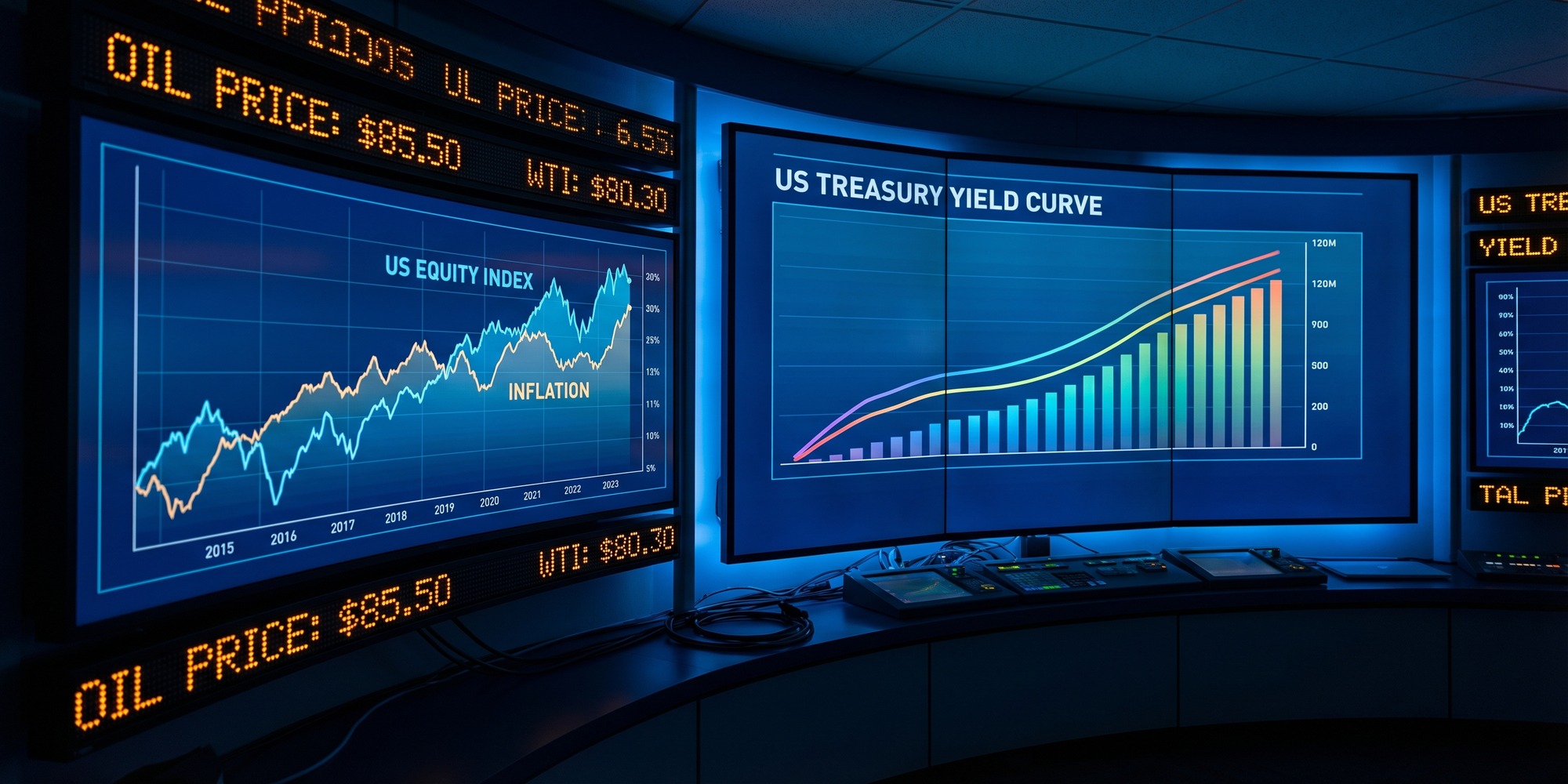
U.S. equities extended their rebound into the April 9 close, but the move arrived with a clear condition attached: the next inflation print. Reuters reported that the Dow Jones Industrial Average rose 275.88 points, or 0.58%, to 48,185.80, while the S&P 500 gained 0.62% to 6,824.66 and the Nasdaq Composite added 0.83% to 22,822.42. The direction was positive, yet the pace was measured, consistent with a market that is adding risk while still carrying macro hedges into the CPI release.
Cross-asset pricing reflected that same mix of relief and caution. Oil finished off intraday highs, the dollar index softened, and front-end Treasury yields edged lower. At the same time, commodities that are sensitive to geopolitical and inflation risk remained elevated compared with early-March baselines. Investors appear to be shifting from headline-driven volatility to data-driven volatility, with inflation breadth likely to matter more than the CPI headline alone.
RISK APPETITE IMPROVES, BUT HEDGES ARE STILL IN PLACE
Reuters settlement data showed how unevenly risk has normalized. WTI crude settled at $97.89 per barrel, up 3.66% on the day, after touching an intraday high near $102.70. Brent closed at $95.92, up 1.23%, after reaching roughly $99.50 intraday. That pullback from peak levels helped equities stabilize, but these are still elevated energy prices relative to the pre-shock range, which keeps transportation and input-cost risk in play for the next inflation cycle.
Rates and currency action reinforced a "risk-on with hedges" profile rather than a full repricing of macro stress. The 10-year Treasury yield ended near 4.289%, the 2-year yield near 3.785%, and the DXY dollar index around 98.83. Lower front-end yields and a softer dollar tend to support equity multiples, especially in growth sectors, but persistent strength in oil and precious metals suggests markets have not dismissed supply-side inflation channels.
That global channel remains relevant for U.S. assets. Coverage from Global Market Updates on the oil rebound and ceasefire trade points to similar two-way positioning across international equities and commodities. For U.S. benchmarks, global energy flows still pass directly into domestic inflation expectations through transport, manufacturing, and services input costs.
ENERGY PASS-THROUGH IS NOW THE CPI QUESTION
The immediate policy question is not whether oil moved, but whether the move has already reached consumer prices broadly enough to change the inflation trend. A one-off spike can distort headline CPI without materially shifting core dynamics. A sustained energy shock, however, can pass through freight rates, utility bills, and goods pricing over subsequent months. That distinction is what markets are testing as they move from intraday geopolitics to scheduled macro releases.
Recent Fed communication supports this conditional framing. Reuters reported that St. Louis Fed President Alberto Musalem described policy as "well positioned" while warning that higher fuel and input costs can increase inflation persistence risk. In a March 26 speech, Federal Reserve Vice Chair Philip Jefferson similarly emphasized that inflation remains above target and that energy pressure can lift short-term headline readings, keeping decisions data dependent rather than calendar driven.
"Policy is well positioned" but persistent cost pressures can complicate the path back to target inflation.
— Reuters summary of St. Louis Fed President Musalem, April 1, 2026
From an equity-allocation perspective, this creates a narrower window for complacency. If CPI confirms limited pass-through, the current rebound can broaden across cyclicals and rate-sensitive growth segments. If CPI comes in hotter than expected, rates could reprice quickly and compress the same valuation pockets that outperformed during the relief rally.
SECTOR AND POLICY BACKDROP INTO Q2
Sector leadership over the last two sessions has leaned toward growth and broad beta rather than defensive energy concentration. That is constructive for index breadth, but it also raises sensitivity to macro surprises. When leadership widens after a shock period, markets tend to demand cleaner macro data to sustain the move. CPI, then producer-price detail, and then early earnings commentary will decide whether this becomes a durable rotation or a short-lived rebound.
Policy and diplomacy remain part of the same risk stack. Security architecture around critical shipping routes and sanctions design can still alter oil assumptions quickly, as seen in US Foreign Policy's latest deterrence analysis and Foreign Diplomacy's Hormuz sanctions coverage. For U.S. investors, these channels feed directly into inflation breakevens, Fed path probabilities, and sector-relative earnings risk.
FORWARD LOOK: THE THREE CHECKPOINTS AFTER CPI
First, markets will focus on inflation composition, not just the headline print, especially shelter momentum, services ex-energy, and any renewed goods-price pressure linked to fuel costs. Second, Treasury response will matter as much as equities, because a sustained backup in front-end yields could tighten financial conditions quickly. Third, earnings guidance from banks, transports, and large retailers will reveal whether management teams are changing cost and margin assumptions for Q2.
The current setup is therefore constructive but conditional. April 9 delivered a stronger close in U.S. equities, a softer dollar, and modestly lower front-end yields, while oil pulled back from extremes without fully normalizing. That combination can support risk assets in the near term, but it only becomes a durable trend if inflation data and policy signals align over the next several sessions.
Sources: Reuters global markets recap (April 9), Reuters on Musalem remarks (April 1), Federal Reserve speech by Vice Chair Jefferson (March 26).
This analysis is for informational purposes and is not investment advice.