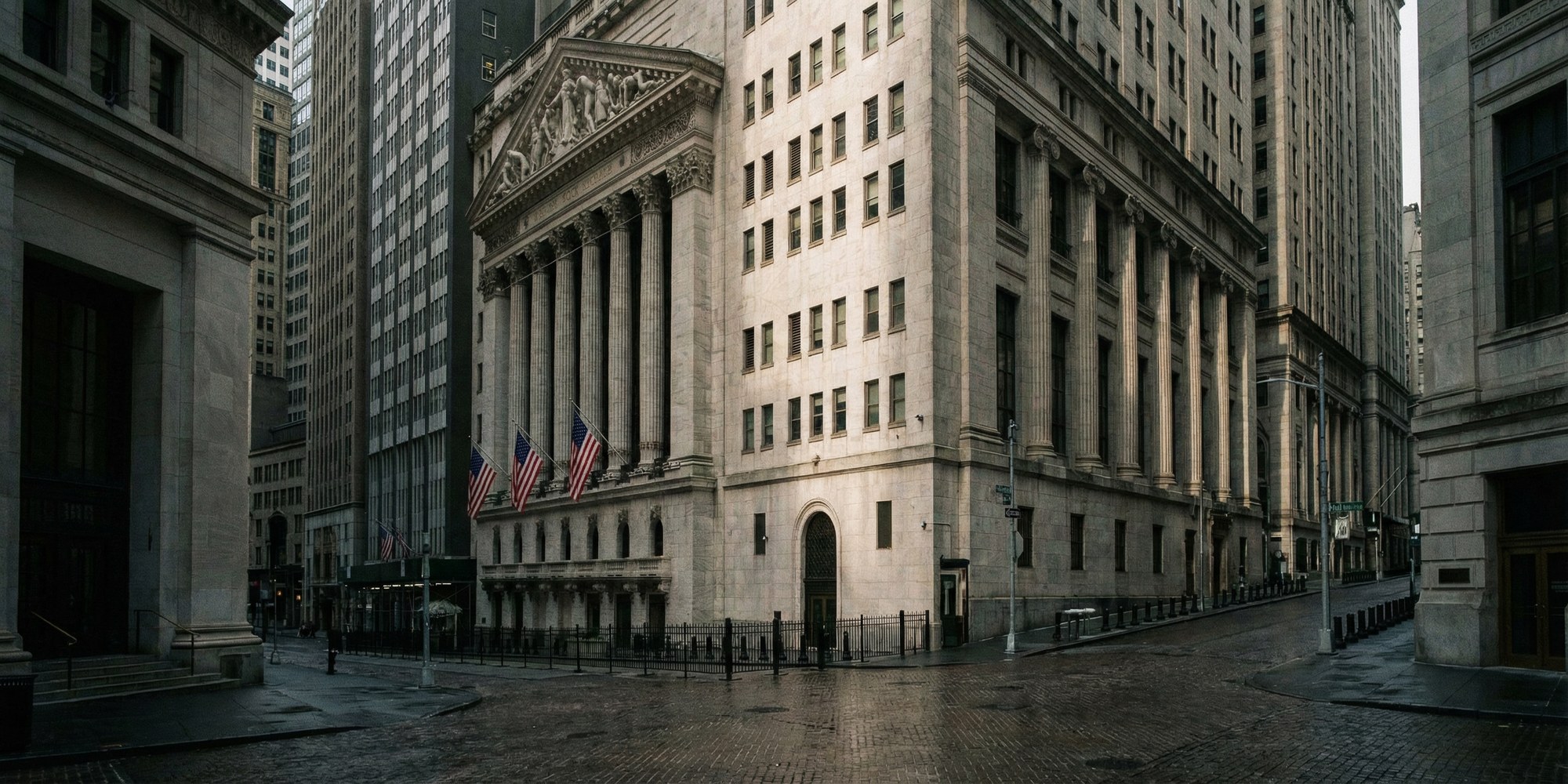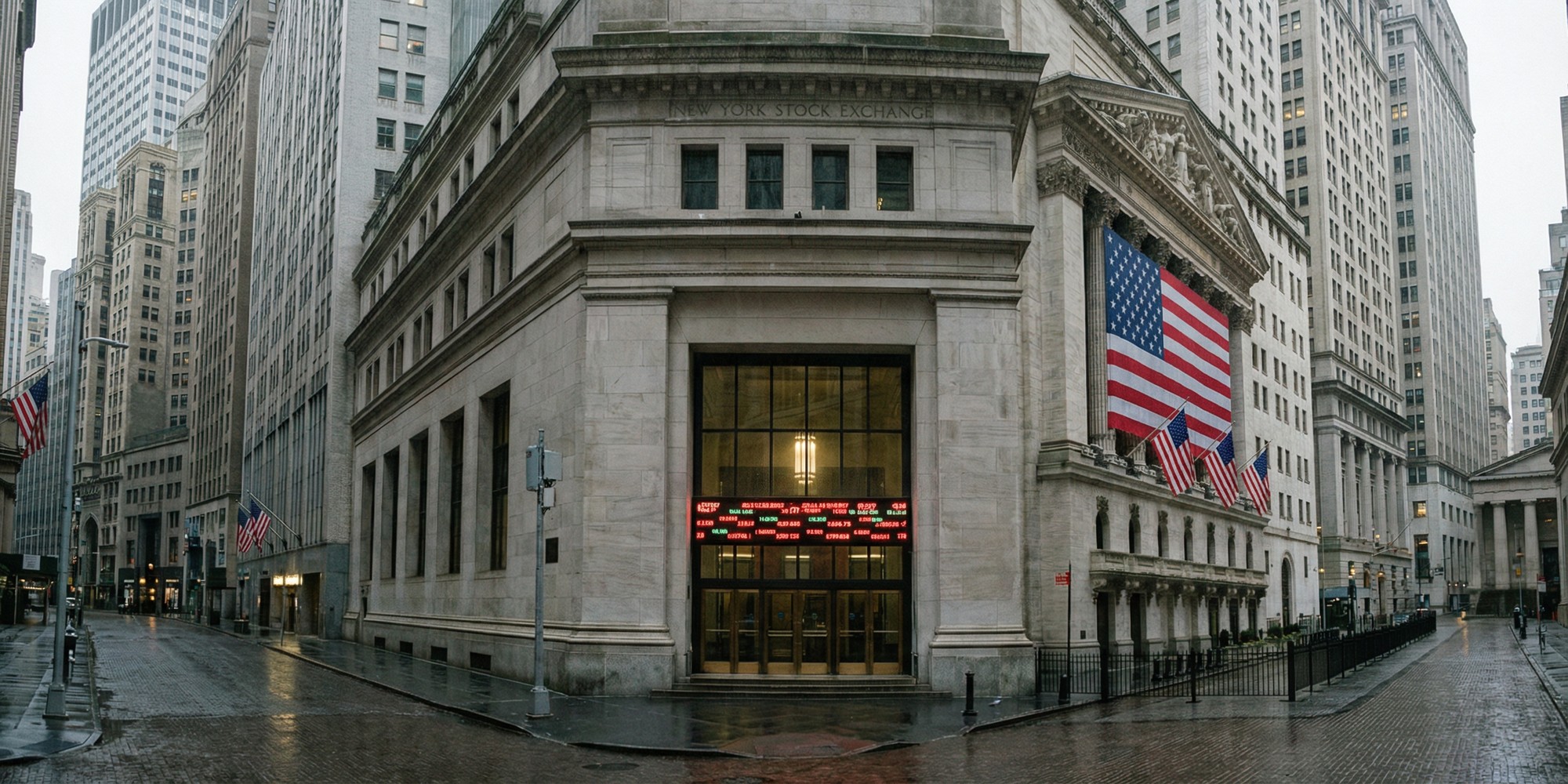
U.S. equity futures fell sharply in pre-market trading Monday as President Trump's 48-hour ultimatum to Iran entered its final hours, pushing all three major indices toward their fifth consecutive week of losses — a streak not seen since 2022. The selloff unfolded across nearly every asset class simultaneously: equities, bonds, and traditionally defensive metals all declined together, signaling a depth of market stress that goes beyond a single sector's repricing.
Dow Jones Industrial Average futures dropped 395 points, or 0.87 percent, ahead of Monday's open. S&P 500 futures declined more than 1 percent. Nasdaq-100 futures fell 1.2 percent. The breadth of the selling — spanning U.S. equities, European indices, Asian markets, gold, silver, and long-duration Treasuries — reflects a market that is not simply hedging a geopolitical event but recalibrating its entire risk framework around a prolonged energy shock.
The Ultimatum and the Market Response
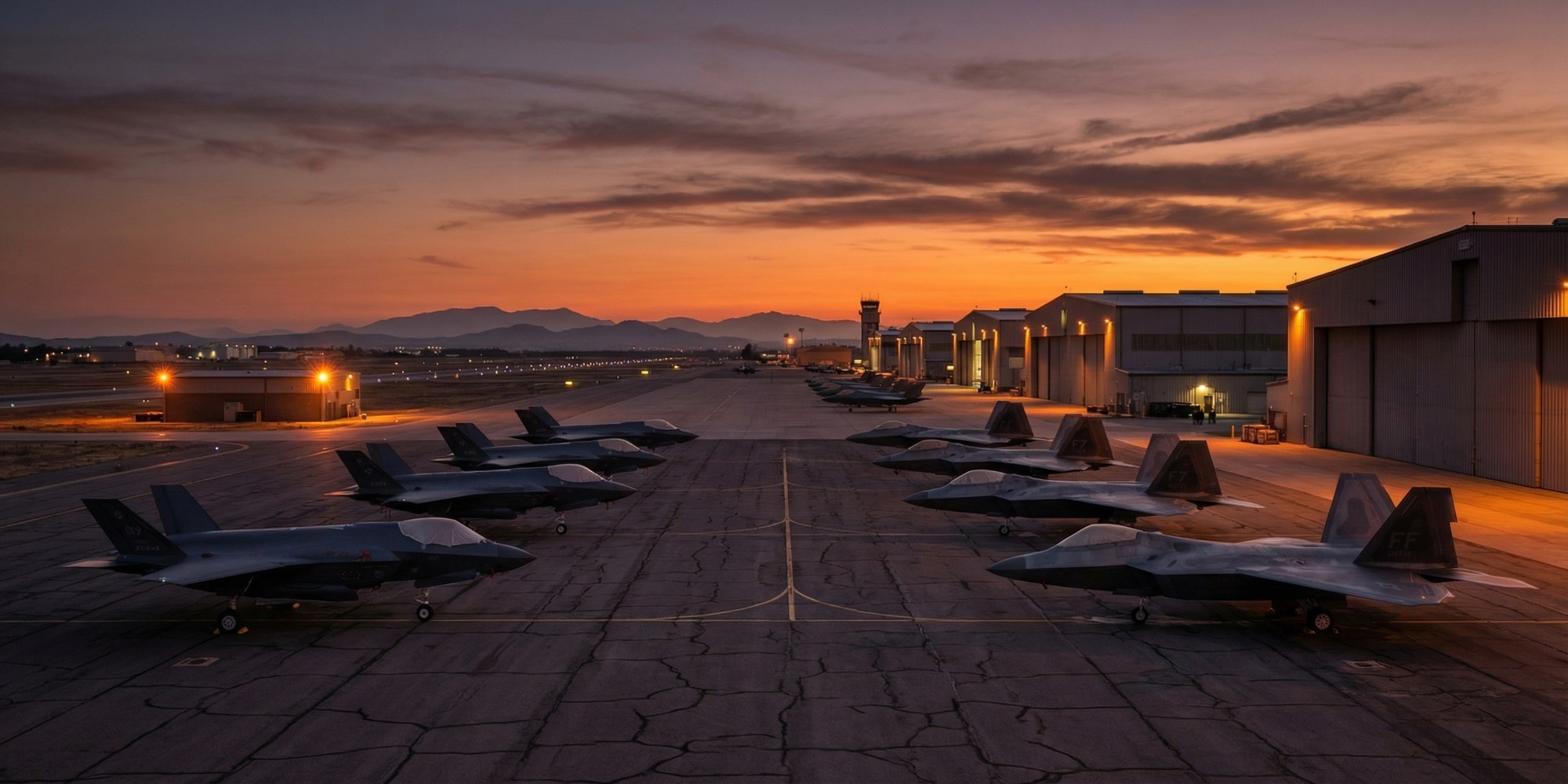
Over the weekend, President Trump threatened to strike Iranian power plants and critical infrastructure unless Tehran reopened the Strait of Hormuz within 48 hours. The response from Iran was unambiguous. Parliament Speaker Mohammad Bagher Ghalibaf stated that critical infrastructure "throughout the region will be considered legitimate targets and irreversibly destroyed," adding that "oil prices will rise for a long time." Iran also issued a novel threat: warning that buyers of U.S. Treasury bonds could face economic retaliation — a financial warfare dimension the market had not previously priced into debt instruments.
That reopen-or-strike ultimatum is the same strait-as-war page on Armed Conflicts’ Strait of Hormuz crisis brief.
Whether hulls are actually moving through the narrows is on OilRoutes’ Hormuz tanker-traffic note.
On the ground, Israel launched fresh airstrikes on Tehran overnight. Iran's ballistic missiles were intercepted by air defenses operating across Kuwait, the United Arab Emirates, Bahrain, and Saudi Arabia. The geographic scope of the missile exchanges underscored that the conflict has extended well beyond a bilateral confrontation. For analysis of the Trump administration's legal and diplomatic framework behind the ultimatum, see Ceasefire Impasse: The US-Iran Diplomatic Endgame at US Foreign Policy.
"Clearly, Iran is not backing down. The risk-off sentiment could worsen substantially this week, with the first visible macro effects in a deluge of global PMI data. Portfolio de-risking could continue, making cash a viable asset again."
— Ben Emons, CIO, Fed Watch Advisors, CNBC, March 22, 2026
Global equity markets registered the same message. South Korea's Kospi fell more than 6 percent and triggered a circuit breaker. Japan's Nikkei 225 declined more than 5 percent. Europe's Stoxx 600 opened 1.6 percent lower. The simultaneous drawdown across every major time zone compressed the window for any safe-haven rotation — there was simply nowhere to rotate into.
Oil Climbs as Gold Collapses
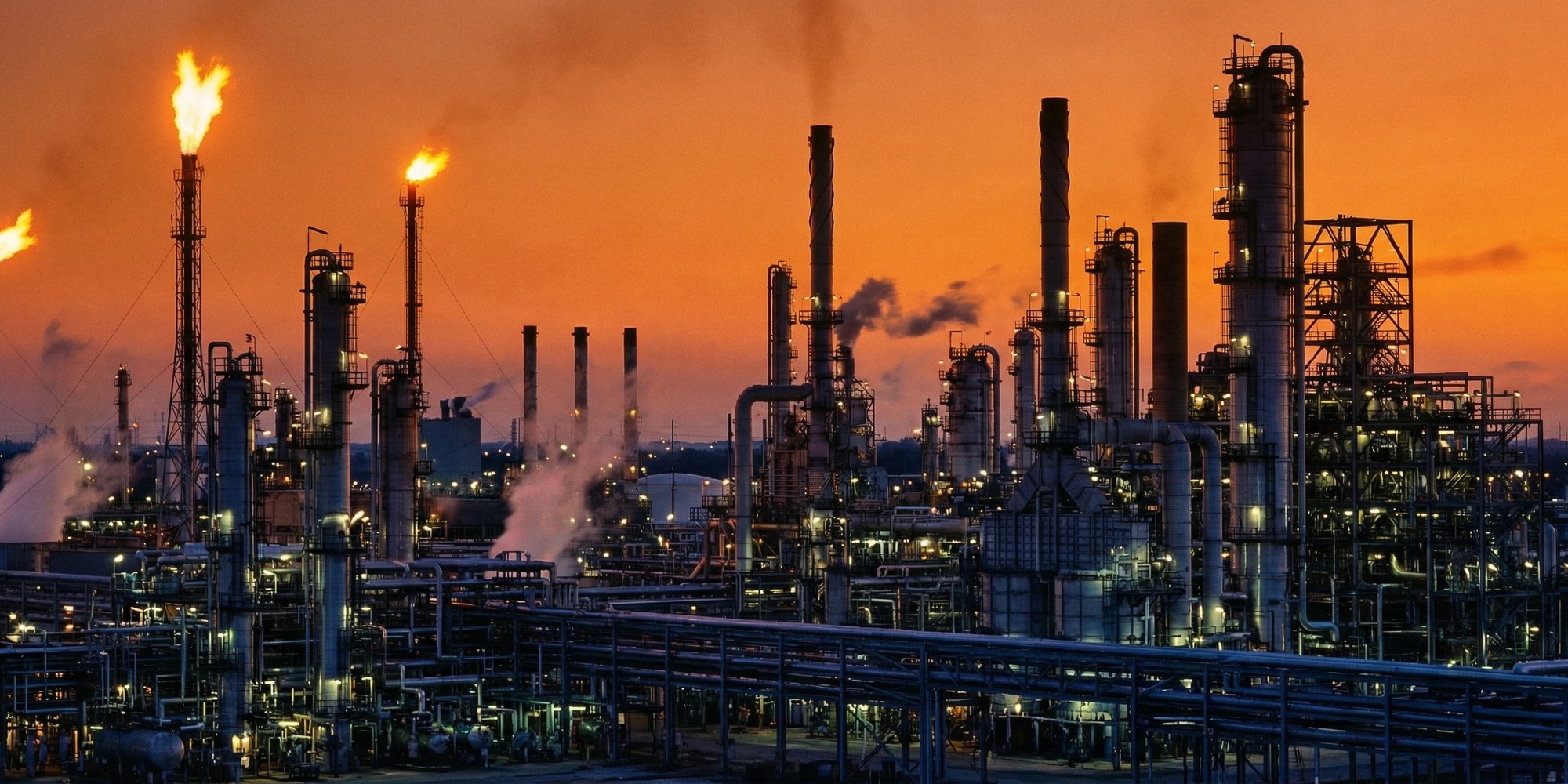
West Texas Intermediate crude futures advanced 2.8 percent to approximately $101.01 per barrel in early Monday trading. Brent crude, the international benchmark, climbed to $113.32 per barrel. The Brent-WTI spread widened beyond $14 per barrel — the largest differential in years — reflecting the structural distinction between landlocked U.S. supply and constrained seaborne crude reaching global refiners.
Goldman Sachs raised its Brent price forecast for March to an average of $110 per barrel and set its April WTI estimate at $105 per barrel. In a research note published Sunday, the bank outlined a more extreme scenario: if Strait of Hormuz flows remain at 5 percent of normal capacity through April 10, Brent is "likely to trend higher over that period" and could approach the commodity's 2008 record near $147 per barrel. For the full Goldman scenario analysis and the global supply shock's implications for international markets, see Oil at $115 and the Stagflation Warning at Global Market Updates.
The International Energy Agency has documented more than 40 energy assets damaged across nine countries since the conflict began. IEA Executive Director Fatih Birol described the cumulative disruption as equivalent to the two major oil crises of the 1970s and the 2022 European gas crisis "put together." Global LNG supply has fallen roughly 20 percent. The IEA's 400-million-barrel emergency reserve release, activated on March 11, has not been sufficient to suppress price levels, and Birol stated that further releases remain under active consideration.
The most counterintuitive market development of the session was the collapse of gold. Spot gold fell 7.8 percent to $4,126 per ounce, with gold futures declining 10 percent to $4,119 — a year-to-date low. From January's record of $5,594.92 per ounce, gold has now lost approximately 26 percent of its value. Silver futures fell 11.7 percent, platinum declined 10.6 percent, and palladium dropped 6.7 percent. The precious metals complex is not behaving like a crisis asset class; it is behaving like a rate-sensitive asset class. Gold pays no yield, and rising inflation expectations from $113 oil are increasing the probability of Federal Reserve tightening rather than easing — making non-yielding metals structurally unattractive even as geopolitical risk climbs.
Index Context: The 200-Day Test and Rate Pressure
Last week's sessions ended with the S&P 500 posting its fourth consecutive weekly loss. The index broke below its 200-day moving average for the first time since May 2025 — a technical threshold that has historically attracted additional institutional selling. The Dow Jones fell 2.0 percent for the prior week; the S&P 500 declined 1.5 percent; the Nasdaq shed 2.0 percent. Four straight losing weeks for the Dow mark the longest such streak since 2023.
Energy remains the sole positive sector in the S&P 500 since the conflict began, gaining 5.9 percent since the war's onset and 31.8 percent year-to-date. Analysts at Oppenheimer have observed a persistent "reluctance among investors to embrace the Energy sector breakout, driven by fears a single headline could trigger a sharp oil reversal." That hesitation has kept energy-sector positioning relatively light even as the fundamentals have strengthened.
On rates, the Federal Open Market Committee held its policy target at 3.50 to 3.75 percent in an 11-1 vote on March 19. The 10-year Treasury yield closed Friday at 4.39 percent, up 11 basis points on the session. The 2-year yield stands at 3.89 percent; the 30-year reached 4.96 percent. The CME FedWatch Tool currently assigns approximately 20 percent probability to a rate hike at the June meeting — a figure that was effectively zero four weeks ago.
"The backdrop domestically is less friendly than it was a couple weeks ago. The Fed has kind of reversed course. The market has removed basically every rate cut from this year, and now is pricing odds of a hike."
— Ross Mayfield, Investment Strategist, Baird, CNBC, March 20, 2026
What to Watch This Week
The immediate binary for markets is Trump's Monday-evening deadline. A decision by Tehran to reopen the Strait — or a U.S. strike on Iranian power infrastructure — will reset the trading calculus for the week. Neither outcome appears imminent. S&P Global's flash U.S. Purchasing Managers' Index for March is scheduled for Tuesday morning, offering the first comprehensive domestic economic snapshot since the oil shock intensified; a reading below 50 in manufacturing or services would add recession risk to an already compressed sentiment environment.
Federal Reserve officials are expected to speak throughout the week. Any shift in language regarding inflation tolerance or the rate-hike threshold will be closely parsed. In equities, the VanEck Semiconductor ETF closed Friday at $384.74; analysts at Fundstrat have identified the $369 level as critical support — a sustained break below that floor could accelerate rotation out of technology and into defensive positions ahead of quarter-end. At Treasury auctions, foreign central bank demand will be scrutinized with unusual intensity given Iran's explicit threat to target U.S. bond buyers.